Home / By location
By locationPressure Washing Cost in Baton Rouge, LA
Baton Rouge is sixty miles from open water and carries no salt at all — but it does not price like the other inland metros on this table. The thing that reprices a quote here is that a great many houses no longer have one wall. After August 2016 the bottom of the house is newer than the top, and those two surfaces do not clean the same way.
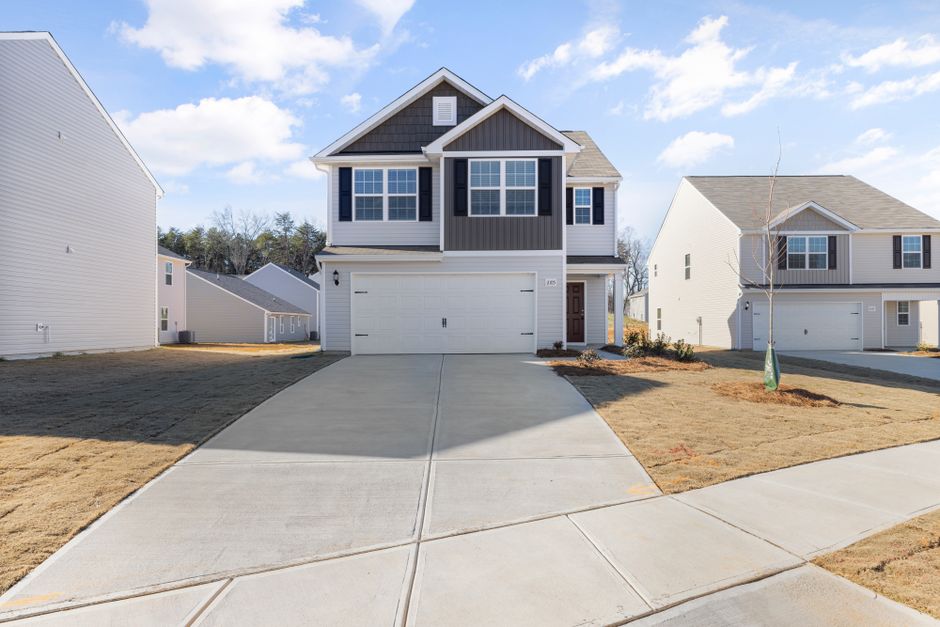
In Baton Rouge, a typical single-story house wash runs about $155–$320, a two-story $320–$640, a driveway $100–$215, and a shingle roof soft-wash $340–$710. The metro average of about $295 sits mid-table: there is no salt load and no tile roof stock to pay for, but Louisiana is not a cheap-and-dry inland market either. What moves an individual Baton Rouge quote is how much of your wall was replaced. The National Weather Service puts the August 2016 flood at “50,000 to 75,000 structures”, concentrated in East Baton Rouge, Livingston and Ascension — and a house rebuilt from the floor up is a two-material elevation, not one.
Every metro page on this site names the one local fact that a national average cannot see. On the coast that fact is salt. In the Ozarks it is hail. In Baton Rouge it is a rebuild line — a horizontal seam, usually somewhere between knee height and the window sills, where new material meets original material on the same wall. It is invisible in a photograph and decisive in a quote, and almost nobody mentions it when they call for a price.
What Baton Rouge homeowners actually pay
| Job | Typical range | Notes |
|---|---|---|
| House wash — single story | $155 – $320 | Soft wash on brick veneer, vinyl or fiber cement. The Capital Region default. |
| House wash — two story | $320 – $640 | Reach and ladder time. Common in the newer Ascension and East Baton Rouge subdivisions. |
| Driveway / walkway | $100 – $215 | Surface cleaner on concrete. Organic film rather than mineral staining — see below. |
| Carport slab and ceiling | $65 – $150 | A genuine line item here and one of the dirtiest surfaces on the property. Permanently shaded. |
| Covered porch or breezeway | $85 – $190 | Same problem as the carport: roofed, so it never gets rinsed and never gets sun. |
| Wood privacy fence | $95 – $230 | Priced by run and by whether both sides are in scope. Wood-safe pressure only. |
| Deck or patio | $110 – $250 | Low pressure on wood. Drying time matters more than the wash. |
| Roof soft-wash — architectural shingle | $340 – $710 | The near-universal roof here. Soft-wash only, never a power washer. |
| Two-material elevation — staged wash | add $60 – $150 | Rebuilt lower courses plus original wall above. Two mixes, two passes, one elevation. |
| Raised house — piers, underside, stairs | $90 – $240 | Post-flood elevations and older raised cottages. Almost always quoted separately, if at all. |
| Whole-home package | $370 – $800 | House + driveway, often with the fence, carport or roof bundled. |
The wall is often two walls
This is the Baton Rouge section, and there is no version of it that applies to Naples or Greenville. Over three days in August 2016 a stalled system dropped what the National Weather Service describes as “very heavy rainfall of 20 to 30 inches” across Southeast Louisiana, and the agency’s own summary puts the toll at “50,000 to 75,000 structures flooded from this event”, with the worst of it in East Baton Rouge, Livingston, Ascension and Tangipahoa. This was not a hurricane and it was not surge. It was rain, inland, on ordinary neighbourhoods a long way from the coast.
What that left behind, a decade on, is a housing stock in which a very large number of houses were gutted and rebuilt from the floor upward. In practice that means the bottom section of the exterior is newer than the rest of it. Sometimes it is the same material replaced like for like. Frequently it is not: original painted board or chalked aluminium above, modern fibre cement or vinyl below, or brick veneer that was repointed and repainted only as high as the water went. Occasionally the whole elevation was refinished and the seam is only visible as a change in how the paint has aged.
Three things follow, and all three cost money.
The two halves take different chemistry. A soft-wash mix calibrated for eight-year-old fibre cement is not the mix for forty-year-old chalked paint above it, and a crew running one strength across the whole elevation will either leave the top dirty or take pigment off it. The honest answer is two passes on one wall, and that is where the extra $60 to $150 in the table goes.
The seam itself is the vulnerable part. Wherever new material meets old there is a joint, a flashing detail or a caulk line that is younger than the wall around it, and it is the one place on the elevation where water driven upward has somewhere to go. This is the specific reason to be sceptical of a high-pressure quote on a rebuilt house, over and above the usual reasons.
Nobody will ask you about it. A crew quoting from a phone photograph of the front of the house cannot see a rebuild line, and most homeowners have stopped noticing it. Say it out loud when you get quotes: which parts of this wall were replaced, and how high does it go. It is a thirty-second answer that changes what you are being quoted for.
Rain is not a wash — drying time is the whole variable
Baton Rouge homeowners often assume, reasonably, that a climate this wet keeps a house rinsed. It does the opposite. Rain delivers water and delivers nothing that kills anything; what grows on a south Louisiana wall is fed by the water and slowed only by drying. The LSU AgCenter puts the principle about as compactly as it can be put: “The secret to mildew prevention and control is two words -- clean and dry”, and it names “dirt and grease” as the food. That guidance is written for post-flood interior cleanup rather than for siding, and it is worth citing honestly as such — but the mechanism is the same one operating on the outside of the house, all year, with no power outage required.
The practical consequence is that a Baton Rouge house does not dirty evenly, and should not be quoted as though it does. The surfaces that fail first are the ones that stay wet longest after the rain stops:
- The north elevation, and any wall a neighbouring house or a mature tree shades through the middle of the day.
- Under the carport. A roofed slab with an open side is the worst of both worlds — it never gets rinsed by rain and it never gets sun. Carport ceilings and the wall behind them are routinely the dirtiest surface on a Baton Rouge property and routinely outside the phrase “house wash”.
- Behind foundation planting. Shrubs against the wall hold a pocket of humid air at exactly the height where the rebuild line usually sits.
- Deep porches and breezeways, for the same reason as the carport.
So the useful question to a crew here is not “how much for the house” but “how are you pricing the shaded elevations and the covered areas”. A quote that is one number for four walls is pricing an average that your house does not have. Locally, a Baton Rouge crew that prices the rebuilt courses and the original wall as two separate surfaces will say so without being pushed; it is a fair first test of whether the person quoting has actually looked.
You cannot play the calendar here, so play the setup instead
Worth saying plainly, because two of our other coastal pages are largely about timing. On the Grand Strand the rental turnover calendar decides your price; in Pensacola freeze risk, the pine-then-oak pollen drop and storm season between them close most of the year. Baton Rouge has neither structure. There is no vacation-rental peak absorbing crew capacity, hard freezes are brief and occasional rather than a scheduling risk, and the metro is far enough inland that storm season closes the calendar much less reliably than it does on the coast. Pollen season is real and worth waiting out if you can, but that is a matter of weeks, not a season.
The honest read: date flexibility buys you very little in Baton Rouge. If you were hoping to save money by booking in February, that lever mostly is not there. What is there instead is the setup. A crew’s cost is dominated by getting to your address, unrolling, and mixing — so the saving in this market comes from buying more than one surface on the same visit. House plus driveway plus carport in one booking is meaningfully cheaper than three visits, and it is the reason the whole-home package row in the table above is the best value on it. Ask for the bundle price explicitly rather than the sum of the parts.
The flatwork here grows things rather than staining
Concrete in Baton Rouge tends to fail visually in a different way than it does in the hard-water metros further east on this table. There, driveways acquire mineral and iron staining that needs a separate chemistry and often a separate line item. Here the problem is overwhelmingly organic — a dark biological film that builds on a slab which is flat, shaded and slow to dry, sitting on heavy clay soils that hold water rather than drain it. That is good news for the bill: organic film is what a surface cleaner and the right solution are for, and it comes off at the ordinary rate in the table rather than at a stain-removal rate.
Two local caveats. First, an older slab that has moved — and clay soils move slabs — will have open joints and lipped sections that a surface cleaner cannot ride across evenly; expect wand work at the edges and expect it to take longer than the square footage suggests. Second, growth returns to a shaded, damp slab quickly, so treat a driveway wash as an annual item here rather than a once-every-few-years one, and price it that way when you compare quotes.
Where the wash water goes, in the parish that flooded
Wash water carrying detergent, killed algae and lifted grime is a regulated discharge, not garden runoff, and Louisiana administers that through the Department of Environmental Quality’s storm water program under the state’s pollutant discharge elimination system. The relevant point for a homeowner is not the permit structure — that sits with the operator — but that a crew which captures and disposes of its water properly is carrying a cost the cheapest quote is not.
There is a local reason to care more than average. The drainage a Baton Rouge driveway feeds is the Amite and Comite basin system, which is the same system that produced the record river flooding in 2016 and which the parish has been actively re-engineering since. It is a live, visible piece of local infrastructure rather than an abstraction, and asking a crew how they handle their water here is a reasonable pre-booking question rather than a pedantic one.
Roofs: one material, one rule, and a shorter clock
Capital Region roofs are architectural shingle with very few exceptions, which makes this the simplest part of a Baton Rouge quote. The Asphalt Roofing Manufacturers Association tells homeowners not to run a power washer over an asphalt roof at all — the pressure strips the mineral granules that protect the shingle mat — and identifies the black streaking as Gloeocapsa magma, a living algae rather than dirt. Soft wash, dwell, low-pressure rinse. Our roof cleaning cost page sets out the method and the four different growths in full.
What is local is the clock, not the method. Warm, humid and shaded is the fastest recolonisation combination there is, and Baton Rouge supplies all three for most of the year. That does not change the price of a roof wash; it changes how often you buy one. Compare quotes on cost per year rather than cost per visit, and ask any crew what interval they are assuming — a cheaper wash bought twice as often is the more expensive wash.
Getting a real number
Photograph all four elevations rather than just the front, plus the driveway, the carport ceiling, the fence and the roof. Then tell the crew four things before they quote: how high the rebuild line goes and what material is above and below it, which elevations are shaded through the day, whether the carport and any covered areas are in scope, and whether the house is slab or raised. Ask for a flat price by the job rather than an open hourly rate, and confirm the siding and the roof are both being soft-washed rather than blasted. For pressure washing in Baton Rouge we point readers to a crew that quotes flat across East Baton Rouge and Ascension and prices the shaded and covered surfaces openly instead of averaging them into the house number. Our estimator will put a range on it before you call, and the cost-by-city table shows where Baton Rouge sits against the coastal and inland metros either side of it.