Home / By location
By locationPressure Washing Cost in Greenville, SC
The Upstate is one of the cheapest metros on our table — no salt, no tile, inland labor. But it is a brick and painted-wood market, and those are the two surfaces the industry says to be most careful with. That is where a Greenville quote gets repriced.
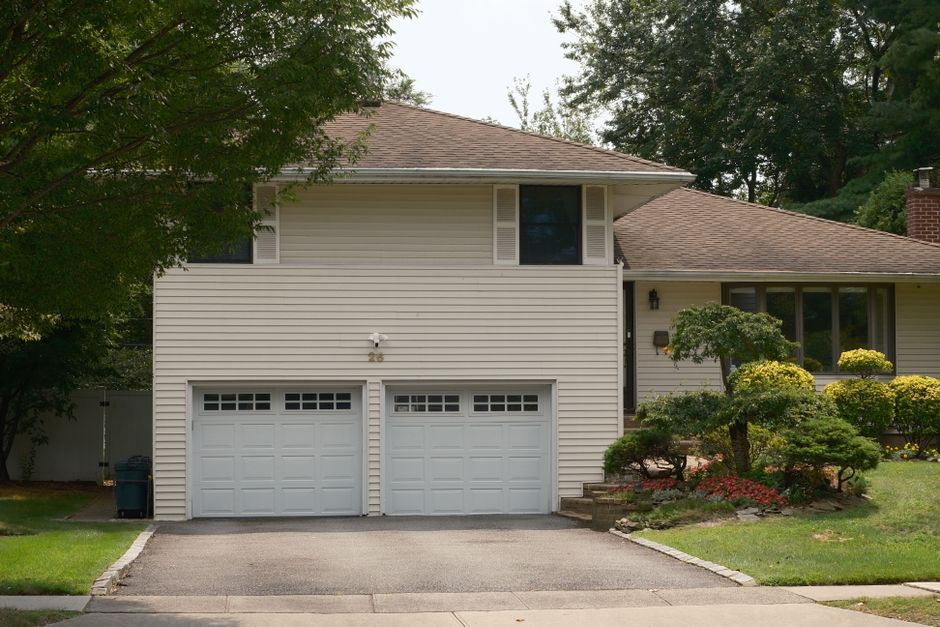
In Greenville, a typical single-story house wash runs about $160–$300, a two-story $300–$580, a driveway $95–$210, and a shingle roof soft-wash $330–$700. The metro average of about $280 sits at the bottom of our table with Columbia and Springfield — the Upstate has no salt film, almost no tile roofing, and inland Piedmont labor rates. What moves an individual Greenville quote is surface, not geography: full brick and pre-1978 painted wood are both slower, lower-pressure jobs than the vinyl and stucco most national calculators assume.
Greenville sits in the Piedmont at the foot of the Blue Ridge, about a thousand feet up, and it prices nothing like coastal South Carolina. Charleston’s numbers are driven by salt air and fragile historic masonry; Greenville has neither the salt nor the harbor labor market. What the Upstate has instead is a housing stock that runs to full brick in the postwar neighborhoods and suburbs, vinyl and fiber cement in the newer subdivisions out toward Simpsonville, Greer, and Five Forks, and small early-1900s painted wood-frame houses through the old textile mill villages. Those three materials are three different jobs at three different prices, and the gap between them is wider than the gap between Greenville and the next metro on our table.
What Greenville homeowners actually pay
| Job | Typical range | Notes |
|---|---|---|
| House wash — single story | $160 – $300 | Soft wash. Full brick and vinyl are both common; brick is the slower one. |
| House wash — two story | $300 – $580 | Reach and ladder time. Sloped Piedmont lots add setup time on one elevation. |
| Painted wood / mill-house siding | $180 – $400 | Pre-1978 paint. Lower pressure, slower passes, and chip containment. |
| Driveway / walkway | $95 – $210 | Surface cleaner on concrete. Piedmont red-clay staining is quoted separately. |
| Red-clay stain treatment | +$50 – $150 | Iron-oxide staining needs the right cleaner and dwell time, not more pressure. |
| Roof soft-wash — shingle | $330 – $700 | The Upstate norm; there is very little tile up here. Soft-wash only. |
| Deck / porch | $120 – $290 | Real wood decking is common in the older neighborhoods; wood-safe pressure only. |
| Whole-home package | $290 – $680 | House + driveway, with the roof sometimes bundled. |
Why the Upstate is one of the cheapest metros on our table
Three things, and none of them is a crew undercharging. There is no salt film. A waterfront Charleston or Gulf home carries a salt haze that holds moisture on the wall and has to be rinsed on its own schedule; a Greenville house simply does not have that problem, so the wash covers less recurring work. There is almost no tile roofing. Concrete and clay tile is the slowest, most fragile, most expensive roof surface in the trade, and it is what puts Naples at the top of our table — the Upstate is asphalt shingle and some metal, which is ordinary work. And inland Piedmont labor costs less than a resort coastal market where the cost of living sets the floor under what a crew must charge to exist. Compare the metro rows in our cost-by-city table: Greenville, Columbia, and Springfield cluster at the bottom for the same structural reasons.
Brick is the Upstate default — and the fussiest common surface
This is the part a national calculator gets wrong about Greenville. Brick looks like the toughest thing on a house, so it invites the highest pressure, and it is actually where the most expensive mistakes happen. The Brick Industry Association’s technical note on cleaning brickwork is blunt about it: pressurized water has been used successfully on brick, but it can cause irreparable damage if done incorrectly, and it is only appropriate for certain brick types. The association’s standing instructions are to start with the gentlest method that will do the job, test the procedure on a small area before committing to a whole wall, and keep the nozzle back rather than driving a jet into the mortar joints — which is exactly how joints get washed out and how water gets pushed into a wall cavity.
What that means for a quote: on brick, low pressure and cleaning solution do the work, and the crew is paying for dwell time and careful rinsing instead of horsepower. A Greenville brick house is not a cheaper job than a vinyl one of the same size, and a bid that treats it as one is bidding the wrong method. Softer older brick and lime-mortar joints on the pre-war housing near downtown are the least forgiving of all — that is test-a-patch-first territory, not a fifteen-minute pass.
The mill villages: pre-1978 paint is a different job
Judson, Monaghan, Poe, Brandon, Woodside, Dunean — Greenville grew up around textile mills, and the villages built for their workers are still standing and still lived in. Most of those houses are small wood-frame homes from the first decades of the twentieth century, they have been repainted many times, and the layers underneath matter. The EPA’s guidance on sources of lead is clear on both halves of this: a home built before 1978 is more likely to have lead-based paint, because that is the year the federal government banned consumer uses of it, and while paint in good condition is usually not a problem, paint that is peeling, chipping, chalking, cracking, damaged, or damp is a hazard that needs attention.
Chalking and peeling is precisely what a wash is called out to remove. Blasting it off a mill house does not make it disappear — it distributes it into the yard, the flower beds, and the soil along the drip line, which on a small mill-village lot is the same ground children play on. The practical version for a homeowner: on a pre-1978 painted house, ask what pressure the crew will use, whether they will contain and collect what comes off rather than letting it wash into the dirt, and what they intend to do about visibly failing paint. A crew that has an answer is quoting a slower job on purpose, and it is worth the difference; a crew that treats the oldest house on the street exactly like a 2015 vinyl one has not looked at it.
Pollen sets the spring calendar, algae sets the interval
Two different clocks run on an Upstate house. The loud one is pollen: from roughly late March into April, pine and oak coat every horizontal surface in the Piedmont in yellow-green, and the phone starts ringing. The important thing to know is that pollen is a nuisance layer, not the reason a house actually needs washing — it rinses off, and if you wash mid-season it comes back the following week. Booking a pollen wash for early May, once the fall is genuinely over, buys the same result and holds.
The quiet clock is the biological film on the north and shaded elevations. Greenville is genuinely wet — the escarpment just north of the county is one of the rainiest corners of the eastern United States, and the humidity that comes with it keeps a shaded wall from ever fully drying between spring and fall. That growth is what sets the real interval, and in the Upstate a shaded house realistically wants a wash every 12 to 18 months while an open sunny lot can stretch past two years. That frequency, not the per-visit price, is where most of the annual spend lives.
Shingle roofs, and the one real winter constraint
Nearly every roof in Greenville County is asphalt shingle, which is the least ambiguous surface in the trade. The Asphalt Roofing Manufacturers Association tells homeowners flatly not to use a power washer on it — the pressure strips the granules that protect the shingle — and prescribes a cleaning solution with a 15 to 20 minute dwell time instead. The black streaking is Gloeocapsa magma, a living algae, so blasting takes off the visible layer and leaves the organism to grow back within months. A roof quote that competes on speed is quoting a worse job.
The genuine local scheduling constraint is winter. Unlike peninsular Florida, the Upstate freezes on a normal schedule and gets the occasional ice storm, and no crew will run water down a wall or leave a hose charged below freezing. Winter is not a dead season here — a mild dry week in January is fine — but it is weather-dependent, and a January booking can slip. Late fall and early spring, before pollen, are the easiest weeks to get a crew’s attention at a normal price.
Where the wash water goes: the Reedy is right there
Greenville’s storm drains run to the Reedy River, which is not an abstraction in this city — it is the water falling through the middle of downtown at Falls Park, and it carries on to the Saluda. Detergent, killed algae, and the residue lifted off a driveway reach it untreated if they enter a storm drain. Stormwater discharge in South Carolina is permitted and enforced by the state Department of Environmental Services, which makes this a state framework with real permits behind it rather than an abstract federal rule. A crew that captures and disposes of wash water properly is carrying a cost the cheapest quote is not, and on a sloped Piedmont lot where everything runs downhill toward a street inlet, it is a reasonable thing to ask about before booking.
Getting a real number
Photograph the front elevation, the roof, the driveway, and any clay-stained concrete, and tell the crew three things before they quote: what the walls are made of, roughly when the house was built, and how much shade it sits in. Those move an Upstate quote more than square footage does. Ask for a flat price by the job rather than an open hourly rate, and confirm the roof, the brick, and any painted wood are all being soft-washed rather than blasted. Locally, the Upstate crew we recommend quotes flat across Greenville County and treats low pressure on brick, wood, and roofs as a rule rather than an upsell. Our estimator will put a range on it before you call, and the cost-by-city table shows where Greenville sits against the rest of the Southeast.