Home / By location
By locationPressure Washing Cost in Pensacola, FL
Pensacola is the cheapest saltwater metro on our table — no tile roofs, panhandle labor, low houses. It is also the only metro that carries full Gulf salt and hard freezes and a brick-and-heart-pine housing stock. What reprices a quote here is exposure, and it changes three times inside twenty miles.
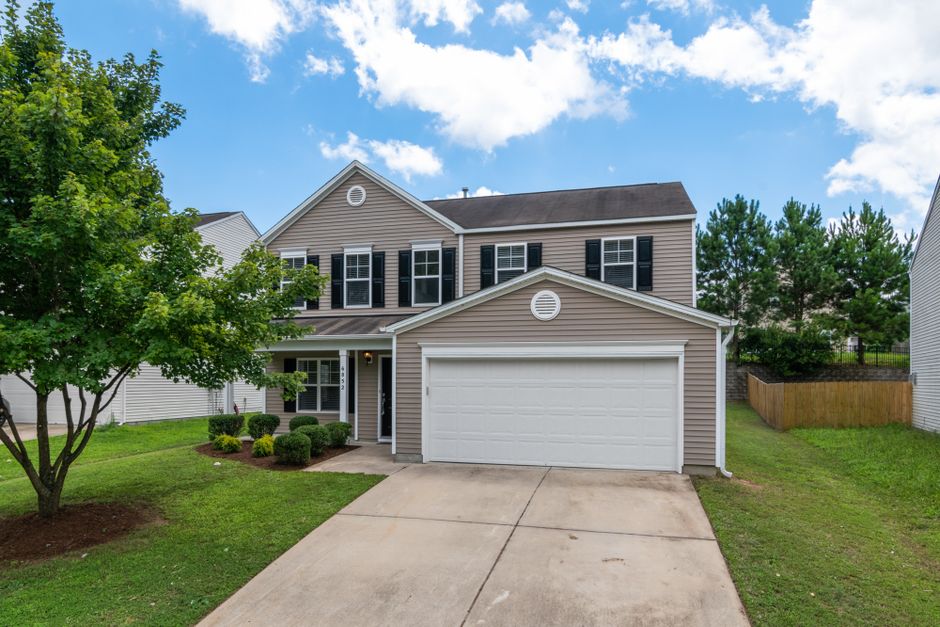
In Pensacola, a typical single-story house wash runs about $175–$340, a two-story $340–$660, a driveway $105–$230, and a shingle roof soft-wash $355–$745. The metro average of about $310 is the lowest of any coastal metro on our table — Escambia County has essentially no tile roofing, panhandle labor costs less than a Southwest Florida resort market, and the housing stock runs low and wide. What moves an individual Pensacola quote is where the house sits: Gulf-front on Pensacola Beach or Perdido Key, bayou- and sound-side around Bayou Texar or Gulf Breeze, or inland in the pine belt toward Cantonment and Pace. Those are three different jobs at three different prices.
Almost every Florida pricing page is written about the peninsula — concrete block, stucco, barrel tile, pool cages, no winter. Pensacola is a different state of affairs. Escambia County is the far western end of the panhandle, closer to Mobile than to Tampa, and the housing stock reads Gulf South rather than Sun Belt: brick ranches and split-levels through Cordova Park, Scenic Heights, and the Ferry Pass and Warrington suburbs; vinyl and fiber cement across the newer subdivisions out toward Beulah and Nine Mile; painted wood and heart pine in the North Hill and Seville historic districts downtown; and block-and-stucco mostly on the barrier-island side, at Pensacola Beach and Perdido Key. Roofs are asphalt shingle and standing-seam or 5V metal — there is almost no tile in the county. Price a Pensacola wash off a Naples or Sarasota calculator and you will be wrong in both directions at once.
What Pensacola homeowners actually pay
| Job | Typical range | Notes |
|---|---|---|
| House wash — single story | $175 – $340 | Soft wash. Brick and vinyl are the two common walls across the county. |
| House wash — two story | $340 – $660 | Reach and ladder time. Less of the stock than in a peninsular subdivision. |
| Historic wood / heart pine | $210 – $450 | North Hill and Seville. Pre-1978 paint, lower pressure, slower passes, containment. |
| Driveway / walkway | $105 – $230 | Surface cleaner on concrete. Sand-loaded pavers take longer than plain flatwork. |
| Salt rinse — Gulf-front / soundside | +$40 – $120 | A separate low-pressure fresh-water pass on its own schedule, not part of a wash. |
| Screen enclosure / lanai | $120 – $290 | Sand and salt film in the mesh. Low pressure only — high PSI tears screen. |
| Dock, boardwalk, or seawall cap | $130 – $340 | Bayou and sound frontage. Wood-safe pressure; growth line at the waterline. |
| Roof soft-wash — shingle | $355 – $745 | The county norm. Soft-wash only, never a power washer. |
| Roof soft-wash — metal | $360 – $720 | Common on coastal and older in-town homes. Worked from ladders and edges. |
| Whole-home package | $290 – $680 | House + driveway, with the roof sometimes bundled. |
Why Pensacola is the cheapest saltwater metro on our table
Three structural reasons, and none of them is a crew undercharging. There is essentially no tile roofing. Concrete and clay tile is the slowest and most fragile surface in the trade, and it is the single biggest reason Naples sits at the top of our table; Escambia County is shingle and metal, which is ordinary work. Panhandle labor costs less than a Southwest Florida resort market where the cost of living sets the floor under what a crew has to charge to exist. And the houses are lower — a one-story brick ranch is reachable from the ground or a short ladder, and a metro built mostly one story deep has a cheaper average job than one built two and three.
What Pensacola is not is the cheapest metro overall, and the reason is worth understanding before you compare quotes. Salt is real, recurring work that Springfield, Columbia, and Greenville simply do not have in them. Compare the rows in our cost-by-city table: Pensacola sits below every other coastal metro we cover and above every inland one, and that gap is the price of the water.
Exposure changes three times inside twenty miles
This is the section a national calculator structurally cannot write, and in Escambia and Santa Rosa counties it is the whole story. The same 1,800-square-foot house prices differently depending on which of three bands it sits in.
Gulf-front — Pensacola Beach, Perdido Key, Navarre Beach. Full salt aerosol off open water, plus wind-driven sand. Salt haze holds moisture against a wall and has to be rinsed on its own schedule, separately from a wash, which is why the salt rinse is its own line above rather than something folded into the house price. This is the most expensive band in the metro, and a beach-side quote that matches an inland one has not accounted for the difference.
Bay, sound, and bayou — Gulf Breeze, East Hill on Bayou Texar, the streets above Bayou Chico. Brackish rather than open Gulf, so much less airborne salt, but far more shade and far more organic load: live oak and magnolia canopy, pine litter, and a waterline growth band on any dock or seawall. Houses here are washed on a shorter interval than the beach ones, for a completely different reason.
Inland pine belt — Cantonment, Molino, Pace, Milton. No salt at all. What these houses get is pine: needle litter in the gutters and roof valleys, tannin staining where it sits and rots on concrete, and a heavy spring pollen load. Tannin is an organic stain that responds to the right cleaner, not to more pressure, and a crew that treats it as ordinary dirt will grind at a driveway for an hour and leave the color in it.
Sand is abrasive, and it is not dirt
Pensacola’s beach sand is fine, bright quartz, and the wind moves it a long way inland. It collects along the bottom two feet of siding, in screen-enclosure mesh, in the joints of paver driveways, and in the tracks of sliding doors, and it behaves nothing like the dust a wash is normally removing. Two consequences show up in a quote. On flatwork and pavers, sand has to be moved with water volume and a surface cleaner rather than blasted, because a narrow high-pressure jet simply relocates it into the joints and scours the paver face. On screen enclosures the danger is worse: sand-loaded mesh under high pressure abrades and tears, and re-screening a lanai costs several times what cleaning it does. A Pensacola crew quoting a screen enclosure should be talking about low pressure and a cleaning solution, and if it is talking about PSI, get a second quote.
Brick and heart pine: the two careful surfaces downtown
Brick is the postwar Pensacola default, and it invites exactly the wrong instinct — it looks like the toughest thing on the house, so it gets the most pressure, and it is where the most expensive mistakes happen. The Brick Industry Association’s technical note on cleaning brickwork is blunt about it: pressurized water has been used successfully on brick, but it can cause irreparable damage if done incorrectly, and it is only appropriate for certain brick types. The association’s standing instructions are to start with the gentlest method that will do the job, test on a small area before committing to a wall, and keep the nozzle back rather than driving a jet into the mortar joints — which is precisely how joints get washed out and how water gets pushed into a wall cavity. A brick Pensacola house is therefore not a cheaper wash than a vinyl one of the same size; the crew is being paid for cleaning solution and dwell time instead of horsepower.
Downtown is its own case. Pensacola has been continuously settled longer than almost anywhere else in Florida, and the North Hill and Seville districts still carry genuinely old housing — heart-pine frame, many coats deep, on lots where the drip line is somebody’s garden. The EPA’s guidance on sources of lead is clear on both halves of this: a home built before 1978 is more likely to have lead-based paint, because that is the year consumer uses of it were banned, and while paint in good condition is usually not a problem, paint that is peeling, chipping, chalking, cracking, damaged, or damp is a hazard that needs attention. Chalking and peeling is exactly the surface a wash gets hired to clean. Blasting it off does not remove the problem, it redistributes it into the soil along the wall. On a pre-1978 painted house, ask what pressure the crew will use, whether they contain and collect what comes off, and what they recommend for failing paint — a crew with an answer is quoting a deliberately slower job, and that is what the higher historic-wood range above is buying.
The roof rule, and the metal roof most pages skip
Most Pensacola roofs are asphalt shingle, which is the least ambiguous surface in the trade. The Asphalt Roofing Manufacturers Association tells homeowners flatly not to run a power washer over it — the pressure strips the mineral granules that shield the shingle mat — and prescribes a cleaning solution with a 15 to 20 minute dwell time instead, because the black streaking is a living algae (Gloeocapsa magma) that regrows if you only take off the visible layer. On the Gulf Coast that regrowth clock is fast, which is why a roof quote competing on speed is quoting a worse job.
The metal roofs are the part a peninsular Florida page never covers, and Pensacola has a lot of them — standing seam and 5V crimp on coastal builds and on older in-town houses. Metal is not damaged by cleaning the way shingle is, but it is slick, it is walked as little as possible, and the fasteners and seams are where salt does its work. That makes it a ladder-and-edges job: the cost is time and access, not pressure. A metal roof quoted at the same speed as a shingle one is being guessed at.
The calendar: a real winter, and a moving season
Two scheduling facts push Pensacola prices around, and neither appears on a national page.
It freezes here. Unlike Sarasota or Naples, the western panhandle takes hard freezes on a normal schedule, and no crew will run water down a wall or leave a hose charged through one. Winter is not a dead season — a mild dry week in January is workable — but it is weather-dependent, and a January or February booking can and does slip. That compresses the year into the same weeks everyone else wants.
Summer is turnover season. Pensacola is a Navy town: NAS Pensacola and Corry Station in the city, NAS Whiting Field up in Milton. Military moves cluster hard into roughly May through August, and that fills the calendar with rental and move-out exterior cleaning bought by property managers in volume. A homeowner booking into those weeks is competing for the same crews and is likelier to pay a rush premium. The easiest windows locally are late April, once the spring pine pollen has finished falling and before turnover starts, and the stretch from late September into November, when the air is dry, the calendar is open, and there is still enough season left for a wall to dry properly.
Where the wash water goes: it goes to the bayous
In most metros this is a general point. In Pensacola it is specific. City and county storm drains discharge into Bayou Chico and Bayou Texar and on into Pensacola Bay, and those are not healthy waterbodies being protected in the abstract — Bayou Chico is impaired and carries an adopted state restoration plan, the Bayou Chico Fecal Indicator Bacteria Basin Management Action Plan, which Florida DEP administers with load-reducing projects, source identification, and annual reporting. Detergent, killed algae, and the residue lifted off a driveway are not the pollutant that plan is aimed at, but they enter the same storm drains and reach the same water. A crew that captures and disposes of flatwork wash water properly is carrying a cost the cheapest quote is not, and on a street draining toward a bayou the state is actively trying to fix, that is a fair question to ask before you book rather than a technicality.
Getting a real number
Photograph the front elevation, the roof, the driveway, and any screen enclosure or dock, and tell the crew three things before they quote: what the walls are made of, roughly when the house was built, and how far it sits from open water. Those move a Pensacola quote further than square footage does. Ask for a flat price by the job rather than an open hourly rate; confirm the roof, the brick, and any painted wood are being soft-washed rather than blasted; and if you are on the beach or the sound, ask whether the salt rinse is included or is its own visit. Locally, the Pensacola crew we recommend for flat-rate work quotes by the job across Escambia and Santa Rosa and treats low pressure on brick, wood, screen, and roofs as a rule rather than an upsell. Our estimator will put a range on it before you call, and the cost-by-city table shows where Pensacola sits against the rest of the Gulf and Southeast.