Home / By location
By locationPressure Washing Cost in Tallahassee, FL
Tallahassee prices like South Georgia, not like Florida. Wood and brick on red-clay hills under a live-oak canopy is a different job than block and stucco on flat sand — and the local stain most quotes get wrong isn’t algae.
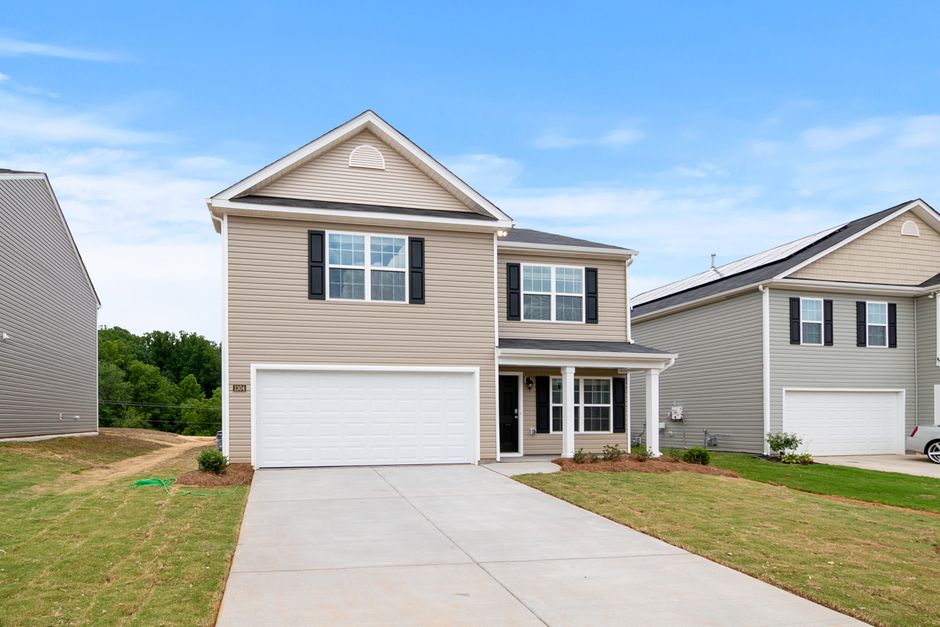
In Tallahassee, a typical single-story house wash runs about $165–$310, a two-story $310–$600, a driveway $100–$220, and a shingle roof soft-wash $340–$720. The metro average of about $285 sits near the bottom of our table — inland North Florida labor, no salt film, and none of the coastal tile premium. Two local things push individual quotes back up: the live-oak canopy, which keeps walls damp and shortens the interval between washes, and red clay staining, which is an iron-oxide stain rather than dirt and does not come off with more pressure.
Almost every “pressure washing cost in Florida” page is written about the peninsula — concrete block, stucco, tile roofs, salt air, pool cages. Tallahassee is none of that. Leon County sits in the Red Hills, closer in geology, tree cover, and building tradition to South Georgia than to Sarasota, and the housing stock reflects it: painted wood siding, brick, and fiber cement on rolling clay hills, with far more two-story homes than a peninsular Florida subdivision has. If you price a Tallahassee wash off a Florida coastal calculator you will get the wrong number in both directions.
What Tallahassee homeowners actually pay
| Job | Typical range | Notes |
|---|---|---|
| House wash — single story | $165 – $310 | Soft wash. Wood, brick, and fiber cement are all common here. |
| House wash — two story | $310 – $600 | Two-story stock is more common than in peninsular Florida; reach and ladder time drive the jump. |
| Driveway / walkway | $100 – $220 | Surface cleaner on concrete. Red-clay staining is quoted separately. |
| Red-clay stain treatment | +$50 – $150 | Iron-oxide staining needs chemistry, not pressure. Priced as an add-on. |
| Roof soft-wash — shingle | $340 – $720 | The Tallahassee norm. Soft-wash only, never a power washer. |
| Roof soft-wash — metal | $350 – $700 | Standing seam and 5V crimp, common on rural and older-in-town homes. Cleaned from ladders and edges. |
| Deck / screened porch | $120 – $300 | More real wood decking here than on the coast; wood-safe pressure only. |
| Whole-home package | $300 – $700 | House + driveway, often with the roof bundled. |
Why Tallahassee runs below the Florida coast
Two structural reasons, the same ones that put inland Lakeland below Naples. Labor costs less inland than in a Gulf resort market where the cost of living sets the floor on what a crew must charge. And there is no salt film — a waterfront Gulf home carries a salt haze that holds moisture and has to be rinsed on its own schedule, and a Tallahassee home simply does not have that problem. Tallahassee also has very little of the concrete and clay tile that makes a Naples roof expensive. Compare the metro rows in our cost-by-city table and the gap is consistent across the inland South.
The canopy is the real cost driver
Tallahassee’s canopy roads and the mature live oaks through Myers Park, Los Robles, Betton Hills, and the older Midtown streets are the city’s signature, and they are also why a Tallahassee house needs washing more often than its price band suggests. Deep shade means a north or east elevation may never fully dry between spring and fall. The film that grows there is biological, not dirt, and it comes back on a schedule. The EPA’s guidance on mold and moisture makes the point that matters for a quote: mildew is a moisture problem first, so a wash that forces water behind wood siding or a lap joint trades a visible stain for a concealed moisture problem. Drying and drainage matter as much as the cleaning does — which is an argument for a careful crew rather than a fast one, and part of why the low bid on a shaded, wood-sided house is often the expensive one.
Practically, a heavily shaded Tallahassee home runs closer to a 12-month interval where a sunny one can hold 18 to 24 months. That difference in frequency, not in per-visit price, is where most of the annual spend actually lives.
Red clay: the local stain most quotes get wrong
The Red Hills are named for the soil, and iron-rich clay is the stain that separates a Tallahassee driveway from a Central Florida one. Clay tracked onto concrete, splashed onto the bottom two feet of siding, or washed across a walkway after a storm leaves an orange-red discoloration that is chemically nothing like algae. It is an iron-oxide stain bonded into the surface, and the instinctive fix — more pressure — does not work: it etches concrete, drives the stain deeper into the pores, and on wood or fiber cement it damages the surface long before it lifts the color. Removing it takes the right cleaner and dwell time, which is real product cost and real labor, so a crew that knows the market quotes it as its own line rather than pretending a standard wash covers it. If a Tallahassee quote for a clay-stained driveway has no separate line and no mention of what will be used on it, that is worth one clarifying question before you book.
Brick and wood: North Florida’s two careful surfaces
Tallahassee has a genuine brick housing stock and a genuine painted-wood one, and both are gentler-than-default jobs. On brick, the Brick Industry Association’s technical note on cleaning brickwork is direct: pressurized water has been used successfully on brick, but it can cause irreparable damage if done incorrectly and is only appropriate for certain brick types. Its standing instruction is to start with the gentlest method that will do the job, test the procedure on a small area before committing to a wall, and keep the nozzle back rather than aiming a jet down the mortar joints — which is exactly how joints get washed out. On painted wood the failure mode is different but the conclusion is the same: pressure lifts paint, opens lap joints, and pushes water where the siding was never meant to carry it. Both surfaces are soft-wash work, and both are slower than blasting stucco. That is what the mid-range Tallahassee quote is buying.
The roof rule does not change inland
Most Tallahassee roofs are asphalt shingle, and shingle is the least ambiguous surface in the trade: the Asphalt Roofing Manufacturers Association tells homeowners flatly not to use a power washer on it, because the pressure strips the granules that protect the shingle, and prescribes a cleaning solution with a 15–20 minute dwell time instead. The black streaking on a Tallahassee roof is Gloeocapsa magma, a living algae; blasting removes the surface layer and leaves the organism to regrow within months. The metal roofs scattered through the older in-town and rural properties are a different failure mode with the same answer — metal is slick and walked as little as possible, so it is cleaned from ladders and edges, which costs time rather than pressure. A roof quote priced on speed is quoting a worse job either way.
Two scheduling facts peninsular Florida pages never mention
- Tallahassee freezes. Hard freezes are normal here in a way they are not in Sarasota or Naples, and that genuinely constrains the winter calendar — crews will not run water on a wall or leave a hose charged below freezing. Winter is not a dead season, but it is a weather-dependent one, and a January job can slip a week.
- The student-housing calendar is a demand spike. With two large universities in town, exterior and turnover cleaning demand concentrates hard around the summer lease turnover. Booking a homeowner job into those weeks means competing with property managers buying in volume. Shoulder weeks in early fall and late winter are the easiest time to get a crew’s attention, and the least likely to carry a rush premium.
- Storm debris still applies. Tallahassee is inland but not exempt — NOAA puts the Atlantic hurricane season at June 1 through November 30, and the storms that reach the Big Bend drive organic debris onto every surface and bring limbs down through the canopy. Post-season fall washes are common here for that reason.
Where the wash water goes
This is not a technicality in Leon County. A large share of the area drains into closed basins and sinkholes rather than to a river, and the limestone underneath is the recharge path for the Floridan Aquifer — so detergent and killed algae entering a storm drain are not headed out to sea, they are headed down. Stormwater in Florida is administered by the state Department of Environmental Protection, which makes it an enforced state framework rather than an abstract federal rule. A crew that captures and disposes of wash water properly is carrying a real cost that the cheapest quote is not, and in a karst basin it is a genuinely reasonable thing to ask about before booking.
Getting a real number
Photograph the front elevation, the roof, the driveway, and any clay-stained concrete, and tell the crew three things up front: what the siding is made of, how much shade the house sits in, and whether there is clay staining. Those move a Tallahassee quote more than square footage does. Ask for a flat price by the job rather than an open hourly rate, and confirm the roof, the brick or wood, and the porch screens are all soft-washed. Locally, the Tallahassee pressure washing crew we recommend quotes flat across Leon County and treats low pressure on roofs and wood as a rule rather than an upsell. Our estimator will put a range on it before you call, and the cost-by-city table shows where Tallahassee sits against the rest of the Southeast.