Home / Roof cleaning
Roof cleaningRoof Cleaning Cost in Naples, FL
In Naples the roof number is decided less by the roof than by the address. Airborne salt reaches roughly eight miles inland, so a Park Shore roof and a Golden Gate Estates roof are two different maintenance schedules quoted by the same crew — and “tile” here means two different materials, not one.
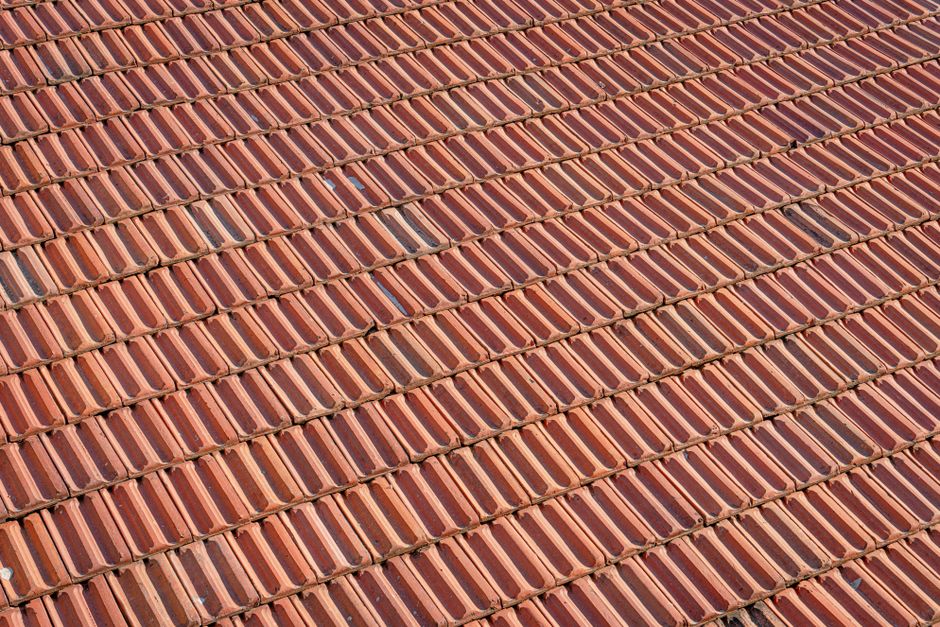
In Naples, soft-washing a shingle roof runs about $400–$650 single-story and $600–$800 two-story or steep, while a concrete or clay tile roof runs about $550–$850 single-story and $800–$1,000 two-story. Large multi-level estate roofs sit above that band at $1,000–$1,800, priced by access rather than by area. But the number that actually decides what a Naples roof costs you is not the quote — it is the interval, and in Collier County the interval is largely a function of how far the house sits from salt water.
Naples is the metro where a roof-cleaning quote is easiest to misread, because two houses of identical size and identical roof material can be on completely different schedules. One is washed every two to three years; the other is streaking again inside twelve months. Nothing about the roof explains it. The distance to the water does. This page prices the job, then explains the part that costs more over a decade of ownership than the job itself.
Two Naples roofs, about eight miles apart
Collier County is unusual among our coastal metros in how far inland it goes. Old Naples, Aqualane Shores, Port Royal, Park Shore, Vanderbilt Beach and Marco Island sit on or within a mile or two of the Gulf. But drive east on Golden Gate Parkway or Immokalee Road and within twenty minutes you are in Golden Gate Estates — still Naples by mailing address, still the same crews, and effectively out of the salt.
That boundary is not folklore. The University of Florida’s landscape-plants guidance treats roughly the first eight miles inland from a saltwater coastline as the zone where airborne salt has to be planned for, advising that trees planted there carry “some degree of tolerance to aerosol salt spray”, with direct-exposure sites at the dunes needing far more. That is horticultural guidance about plants, not roofing guidance, and it is worth saying so plainly — but it is measuring the same thing a roof experiences: how far the Gulf throws salt aerosol before it stops mattering. Naples straddles that line, which is why one crew here works two genuinely different maintenance realities.
The practical consequence is a budgeting one. Salt does not make a coastal roof cost more per wash — the crew, the solution and the hours are the same. It makes the roof need the wash sooner. Two washes in three years on a Gulf-front roof against one wash in three years out east is the same line item priced twice as often, and over ten years that gap is larger than any quote difference you will negotiate.
What a Naples roof clean actually costs
| Roof / job | Typical range | Notes |
|---|---|---|
| Shingle — single story | $400 – $650 | Soft wash, walkable pitch. Least common of the Naples roof stock. |
| Shingle — two story or steep | $600 – $800 | Access, ladders and fall protection drive the jump, not chemistry. |
| Concrete or clay tile — single story | $550 – $850 | The Naples default. More surface area per square of footprint. |
| Concrete or clay tile — two story | $800 – $1,000 | Worked largely from ladders and the edge; slower by design. |
| Large multi-level estate tile roof | $1,000 – $1,800 | Above the metro’s typical band. Priced by access, not area. |
| Metal — standing seam or 5-V | $400 – $750 | Low pressure, coating-safe solution. Usually the simplest surface. |
| Heavy lichen on a shaded north slope | add $150 – $350 | Hand removal; occasionally a second visit. |
| Roof washed with the house and cage on one visit | often 10–20% less | One setup, one mobilisation — ask for it as a package. |
Two of those rows are worth reading twice. The estate row is not a luxury surcharge; it is what happens when a roof is only fourteen feet up but cannot be reached, because a screened enclosure, a paver deck, mature landscaping and sometimes a canal occupy every place a ladder or lift wants to stand. In Naples, reach is a bigger cost driver than height, which is the reverse of how most national cost pages describe roof pricing. And the bundling row is the cheapest thing on this page: the mobilisation is a real share of a small job, so a roof quoted on its own visit is quoted against its own setup.
“Tile” is two materials here, and the porous one is the one that grows
Most of Naples is under tile, and the industry itself does not treat tile as one surface. The Tile Roofing Industry Alliance draws the line by material: clay tile with a matte or glazed ceramic finish is, in its words, “essentially maintenance-free”, while concrete tile is “very low maintenance as well and rarely needs any treatment” — adding that “professional low-intensity pressure washing can be done if desired”. That last clause is the whole method rule for tile in one sentence: professional, low-intensity, optional.
The reason the two behave differently on a Naples roof is porosity. A glazed or vitrified clay surface gives algae very little to hold; a concrete tile body is porous, so it holds moisture longer after a dew or a storm and gives growth somewhere to sit. That is why two tile roofs on the same street can look ten years apart. It is also why the first question to ask a crew is not “how much” but “is my tile clay or concrete, and does that change your method?” — a quote that prices both identically has not been up there. TRI is equally clear that tile work belongs with a professional rather than a rented machine, which is the same conclusion from the liability side: tile is walkable only in specific places and cracks where it is not, and a cracked barrel tile turns a cleaning into a roofing call.
The dry season is the roof’s rest period — unless there is salt on it
Florida’s year is two seasons, not four. The National Weather Service describes the wet season as “the first extending from May through October” with rainfall peaking in August and September, and the dry season running November through April, when “precipitation then remains steady between 2 and 3 inches a month”. For an inland Collier roof that dry stretch is a genuine pause: the surface actually dries between dews, and biological growth slows down for half the year.
A salt-loaded coastal roof gets less of that pause, and the mechanism is simple enough to check yourself — salt is hygroscopic, so deposited salt film holds moisture out of humid overnight air even in a month with almost no rain. The surface stays damp longer than the rainfall total suggests. Inland, the dry season resets the clock; on the water, it mostly slows it.
That turns into a free scheduling lever, and it is the one piece of advice on this page that costs nothing. Book a coastal Naples roof at the start of the dry season, roughly November or December, so the roof goes into its lowest-growth months already clean and you buy the longest possible run before the May rains. A wash booked in April or May does the same work for the same money and hands the wet season a clean surface to recolonise. Inland Collier has more latitude, because the roof is not fighting a salt film either way. This is the opposite of a rush job — if a crew has a January opening and a May one, the January one is worth more to you.
The method rule, and the one thing a wash cannot buy
For the shingle roofs in the Naples mix the rule is harder than tile’s. The Asphalt Roofing Manufacturers Association tells homeowners not to use a power washer on roof algae at all, because the pressure strips the mineral granules that are the shingle’s sunscreen, and prescribes a cleaning solution left to dwell “for at least 15 minutes but no more than 20 minutes” instead. The black streaking under it is Gloeocapsa magma, a living algae rather than dirt, so pressure removes the visible layer and leaves the organism to regrow. Every price on this page assumes soft washing, on every surface. A cheaper Naples quote is usually a different and worse job wearing the same name.
The other thing worth knowing before you book is what a clean roof does and does not do for a Florida insurance or HOA question. That is a real and common reason to schedule the work, but the honest limits are specific, and we have set them out in full on our Lakeland roof cleaning page rather than repeat them here — the short version is that cleaning is cosmetic, and it resolves a flag only when the roof underneath is genuinely sound.
Getting a real number in Collier County
Tell the crew five things and the quote will come back close to final: whether the tile is clay or concrete (or whether it is shingle or metal); how far you are from open water, because that sets the schedule more than the price; whether any slope is shaded and growing green rather than only streaked black; what stands between a ladder and the eaves — cage, pool deck, plantings, canal; and whether you want the house, driveway and cage on the same visit. Ask for a flat price by the job, and confirm in plain words that the roof will be soft-washed, not pressure-washed. Locally, the Collier County crew we recommend for tile-roof soft washing quotes flat and treats low pressure on tile as a rule rather than an upsell. Our national roof cleaning cost guide covers the method behind the growth-type ladder, our Naples pressure washing cost page prices the rest of the property, and the estimator will put a range on it before you call.