Home / Window cleaning
Window cleaningWindow Cleaning Cost
Windows are the one line almost every crew prices apart from the wash itself — by the pane, by the side, with screens and tracks as their own add-ons. Here is what that separate line actually costs.
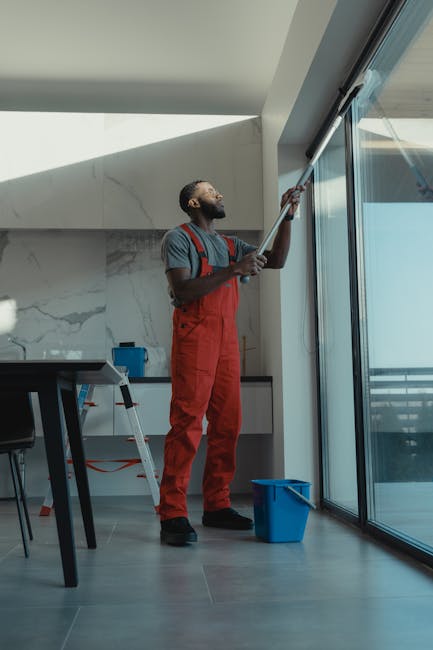
Professional window cleaning runs about $4–$8 per pane, exterior only, so a typical home with 12–20 windows lands near $100–$250. Cleaning the interior too roughly doubles the line, to about $180–$400 for the same house. Screens add about $2–$4 each, and anything above the first storey costs more everywhere it is priced by the ladder, not by the pane.
“Window cleaning” almost never appears as its own line in a whole-home wash quote — it shows up as a footnote, or it does not show up at all until the crew is standing in the driveway. That is not an accident. Glass is a different skill from siding (streak-free finishing, not soft-wash chemistry) and it is priced by a different unit — the pane and the side, not the square foot. This page prices it as its own service, the way a crew that does it seriously actually bills it.
How much does window cleaning cost, per pane and per house?
| Job | Typical rate | Whole-home (12–20 windows) |
|---|---|---|
| Exterior only | $4 – $8 / pane | $100 – $250, avg ~$150 |
| Interior + exterior | $7 – $14 / pane | $180 – $400, avg ~$280 |
| Screens, removed / washed / rehung | $2 – $4 / screen | $30 – $70 for a typical house |
| New-construction / post-build cleanup | $8 – $18 / pane | Varies with paint overspray and stucco dust — see below |
These are our modelled national bands, built the same way as the rest of this site; see our methodology. The spread inside each row is wide because “a window” is not a fixed unit — which is the next thing worth getting straight before any number means anything.
A pane and a window are not always the same thing
A single-hung vinyl window with a snap-in grid between two sheets of glass is one pane to wash, on each side — the grid pattern is cosmetic and sits inside the sealed unit, so a cloth passes over it in one motion. A true divided-lite window — genuine small panes of glass, each in its own wood or vinyl bar, common on older and higher-end homes — can carry six, nine, or twelve individual panes in the same opening, and every one of them has to be wiped and finished on its own edges. Two windows the same size can take four times the labor for that reason alone. Before you compare two quotes, count real panes on at least one window, not openings.
Why interior cleaning almost doubles the price
The glass itself is not harder to clean from inside. The added cost is everything around it: furniture and blinds have to be moved and protected, floors and sills get a drop cloth, and the crew is now working room-to-room on your schedule instead of walking a ladder around the outside on theirs. Most homeowners have the exterior done every year and the interior every two to three, which is also why a quote that only mentions one side is worth asking about — see the red flags on our whole-home package page for the same pattern on a bigger job.
Screens and tracks: what is actually included
Screens are almost always a named add-on, not a default: a crew has to pop each one out, wash it flat, let it dry, and reset it, which is real per-screen labor rather than a wipe-in-place. Track and sill detailing — the debris channel the sash slides in, which collects the most visible grime on the whole window — is sometimes bundled into the base price and sometimes its own line. Ask for both named separately on the quote. If you are already booking a whole-home wash, our package page prices that bundle; this page prices window cleaning as the standalone service, because a package quote frequently prices the wash and treats the glass as an afterthought.
Why the second storey costs more — the ladder rule behind it
It is not a markup for the word “upstairs”. OSHA’s portable-ladder standard requires that “the top or top step of a stepladder shall not be used as a step” and that “each employee shall use at least one hand to grasp the ladder when progressing up and/or down the ladder” — which rules out the two shortcuts that make a ground-floor pane fast: standing at full height, and working with both hands free. A second-storey window is finished from a properly footed extension ladder or not at all, and that is slower, every pane, every time. Some crews price around it with a flat upstairs surcharge; others avoid the ladder altogether with a water-fed pole — purified water on an extension pole, the same method used to reach solar panels — which trades ladder time for pole reach at a similar per-pane rate. Ask which one you are quoted.
Hard water spots: why some homes need more than a wash
A plain wash lifts dust and film. It does not always lift mineral deposits, and lower-level glass that sits in a sprinkler’s overspray path is the classic case. USGS explains hard water as “the amount of dissolved calcium and magnesium in the water”, picked up as water moves through soil and rock — the same minerals that, in a home’s plumbing, USGS notes “can form” solid deposits “of calcium carbonate” when the water is heated. On glass, the same minerals dry into a hazy, spotted film that a standard solution pass will not fully clear; it usually needs a milder acidic treatment left to dwell rather than a second rinse. If your lower windows get hit by irrigation daily, mention it when you book — it is a real reason a quote can run above the table above, and it is not the crew padding the price.
Older wood-frame windows and lead paint
On a home built before 1978, the window sash and the track it slides in are exactly the kind of painted, moving, friction surface EPA warns about: “do not use steel wool, scouring pads or abrasive cleaners” on old painted surfaces, and repair work should “fix small areas… without sanding” where possible. A track that is painted shut or gummed with decades of old paint is a scrape-and-lubricate job, not a wipe, and scraping it the wrong way puts lead dust exactly where hands and faces are. Tell the crew the build year up front; a serious operator asks before touching a stuck sash on an old house, not after.
Find a local pro
In the Midlands, where pine pollen and red-clay dust cloud glass fast every spring, we point readers to the Columbia crew that reaches second-storey glass with a water-fed pole instead of a ladder. Elsewhere, the metro list at the foot of this page covers the rest of our coverage area.