Home / Roof cleaning
Roof cleaningRoof Cleaning Cost in Springfield, MO
Springfield sits at the bottom of our cost table, and the roof is the surface where that is easiest to misread. There is no tile and no salt here, so the expensive question on most of this guide barely exists — what actually decides a Greene County roof quote is whether the growth is moss or only streaking, and how much life the roof has left.
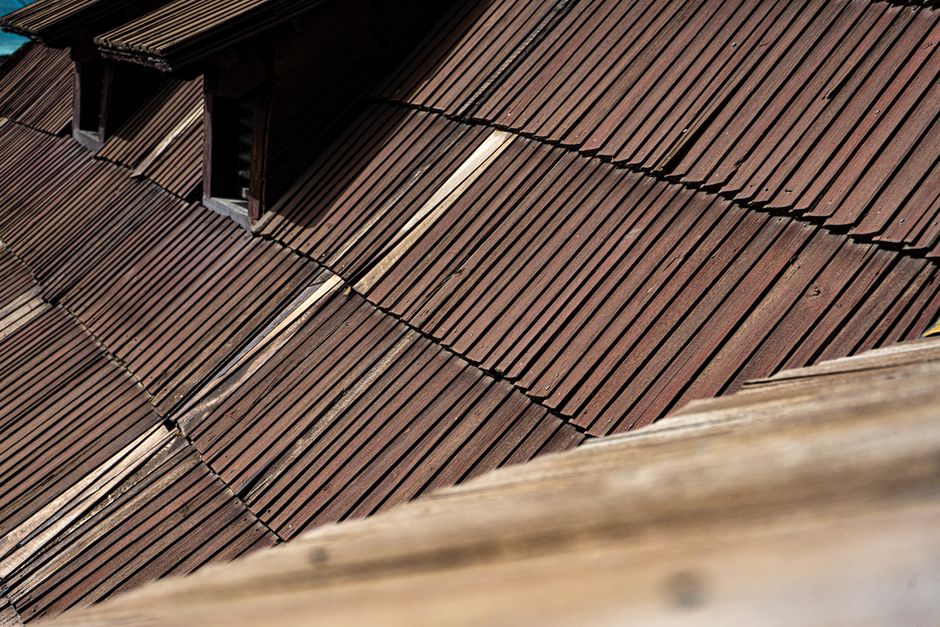
In Springfield, soft-washing a shingle roof runs about $280–$560 single-story and $500–$780 two-story or steep, with the less common metal roof roughly $340–$650. Two add-ons carry the difference between quotes: hand-removing moss or lichen from a shaded slope ($135–$340) and a debris and gutter pre-clear on a wooded lot ($70–$160). Cleaning the roof on the same visit as the house usually saves 10–20%. Nearly every roof in the metro is asphalt shingle, so the material question that drives a Florida quote is close to absent — what moves a Springfield number is the kind of growth and the roof’s remaining life.
Almost every roof-cleaning page treats black staining and moss as one problem with one price. On a Gulf Coast roof that is a forgivable simplification. In southwest Missouri it is the whole decision, because the two growths carry completely different consequences on a house that has to sit through a Missouri storm season — and because the roof under them is far more likely than a coastal roof to be either brand new or nearly finished. This page is about those two questions. The rest of the house — brick, native stone veneer, the karst ground the wash water runs into — is on our Springfield pressure washing cost page, and the general price ladder for growth is on the national roof cleaning guide.
Streaking is an appearance job. Moss is a wind job.
This is the sentence that should decide what a Springfield homeowner buys first, and it comes from the shingle manufacturers themselves rather than from a crew selling the work. On black algae streaking, the Asphalt Roofing Manufacturers Association is unusually candid: “There is no scientific evidence that algae is damaging to asphalt shingles, although it certainly affects the aesthetics of a roof.” Streaking is real, it is a living organism, it looks bad from the street — and by ARMA’s own account it is not eating the roof.
Moss is a different finding entirely. The same guidance says moss “can cause the leading edges of the shingles to lift or curl, which increases the risk of shingle blow-off during wind events,” and that “in severe cases, moss build-up can cause lateral water movement resulting in moisture damage to the roof deck or may even cause leaks.” Read that clause about wind events in the metro it applies to. The National Weather Service office in Springfield maintains a standing catalogue of significant and widespread severe thunderstorm and tornado outbreaks across southwest Missouri and the Ozarks — this is a place where the phrase “during wind events” describes several ordinary weeks a year rather than a rare emergency. Lifted shingle edges on a roof that will meet 60-mph outflow winds in May are a different purchase from lifted shingle edges in a calm climate.
The practical use of that split is that it lets you spend less, not more. If the shaded slope is furred green and spongy, the moss line is the one worth buying, and buying before the spring storm season rather than after it. If the roof is only streaked black and the moss line is on the quote anyway, ask what the crew is actually seeing up there. A homeowner who has been told that streaking is destroying their shingles has been told something the manufacturers’ own association does not say.
Two other pages on this guide reach the same “deal with the moss” conclusion by completely different routes, and the reason is worth knowing because it changes the timing. In Greenville the mechanism is freeze-thaw — water held in the moss mat expands and contracts through an Upstate winter. In Tallahassee it is the tree canopy loading the roof with debris that keeps the moss fed. Springfield has a version of both, but the reason to move first here is wind, and wind peaks in spring rather than in winter.
Ask how old the roof is before you buy a clean
The cheapest thing you can do before booking is find out what is on the roof and when it went on, because in this metro the answer changes the recommendation more often than it would on the coast. Two ends of that:
A roof near the end of its life is not worth cleaning. A soft wash removes the organism and improves the look; it does not add service life, and on a shingle that is already curling, brittle or shedding granules it is money spent on a surface that is being torn off. If a roof has taken a serious storm and has never been looked at, the order of operations is inspection first — that rule and the reason behind it are on our Springfield pressure washing cost page, and it is worth reading before spending anything on a wash.
A recently replaced roof may already be resisting algae. ARMA lists applying shingles that incorporate algae resistant copper granules among the preventive measures that “may be employed when it is time to replace a roof” — the important half of that sentence being when it is time to replace. That technology arrives with a new roof and cannot sensibly be retrofitted to an old one; ARMA specifically does not recommend adding zinc or copper strips to an existing roof, and the national roof page covers why. So if your roof was replaced in the last several years, the useful question for the roofer or the paperwork is simply whether the shingles are an algae-resistant product. If they are, streaking should be slow to return and a clean bought on the same interval as a twenty-year-old roof is a clean bought too often. We cannot tell you what share of Greene County roofs carry that technology — nobody publishes that — but it costs one phone call to find out about yours.
What a Springfield roof clean actually costs
These ranges are modeled on the same scale as the rest of the guide (see our methodology) and sit at the low end of it. Springfield is the cheapest metro we cover, for the same reasons its house-wash prices are: inland Ozarks labor, no salt film, effectively no tile, and a housing stock that runs heavily to single-story ranches.
| Roof / job | Typical range | Notes |
|---|---|---|
| Shingle — single story, walkable | $280 – $560 | Soft wash. The Ozarks default by a wide margin. |
| Shingle — two story or steep | $500 – $780 | Access, ladders and fall protection drive the jump — not chemistry. |
| Metal — standing seam or ag panel | $340 – $650 | Common on rural and older Greene County properties. Coating-safe solution, worked from the edges. |
| Moss or lichen on a shaded slope | add $135 – $340 | Hand removal. In this metro it is the line worth buying first. |
| Debris and gutter pre-clear | add $70 – $160 | Blow-off before any solution goes down, on a wooded lot. |
| Roof cleaned with the house on one visit | often 10–20% less | One setup, one mobilisation. Ask for it as a package. |
Our Springfield metro page quotes a shingle roof soft-wash at $310 to $650, which is the blended typical job across that first pair of rows — most Springfield roofs are single-story or a modest two-story, and the two figures describe the same market from different angles. The row people misread is the moss line: it is hands-on-the-roof labour on a specific slope, so it belongs on the quote as its own number rather than folded into a square-foot price. If a bid shows one lump sum for a roof with a mossy north slope and a clean south one, you cannot tell what you are paying for.
The booking window here closes twice a year, not once
Springfield loses roof-cleaning weeks at both ends of the calendar, which is why the shoulder seasons are genuinely priced differently rather than as a sales tactic. Cold closes one end: at Springfield-Branson National Airport the National Weather Service puts the normal January low at 24.2°F, with December at 27.8°F and February at 28.0°F, and normal annual snowfall at 13.7 inches. A shingle roof is soft-washed with a solution left to dwell, and that chemistry neither works nor should be sprayed in freezing conditions, so midwinter is not a booking window at all. The same NWS normals put November and March average lows at 36.2°F, which is why the shoulder months are workable but unreliable — a March date can and does slip.
Spring closes the other end for a reason no page on this guide written about a Florida metro has to think about. May is the wettest month of the Springfield year at 5.56 inches of normal precipitation, and it sits in the middle of the severe season the NWS event summaries document. Booking a roof clean in April or May means competing for dates with everyone else who waited out the winter, on the rainiest weeks of the year, ahead of the storms rather than after them. October, by contrast, is dry by local standards — 3.60 inches normal — still warm enough for the chemistry, and past the season that puts debris back on the roof. If the moss is bad, do not wait for it: get it off before the spring winds. If the roof is only streaked, early fall is the cheaper, calmer, more available buy, and it is the single easiest saving on this page.
What to ask a Springfield roof crew
- Is it moss, or only algae streaking? Ask them to describe what they see on which slope. One is hand-removal labour with a wind consequence; the other is dwell-and-rinse chemistry and mostly cosmetic.
- Soft wash, confirmed in plain words. A shingle roof is soft-washed, never pressure-washed. A pro will say so unprompted and will usually mention the dwell time.
- How old is the roof, and are the shingles algae-resistant? A crew that asks you this before quoting is thinking about whether you need the job at all.
- Is the debris and gutter clear included or extra? On a wooded Ozarks lot it is real work. Get it named in the quote rather than discovered on the day.
- Can the roof go on the same visit as the house? One mobilisation is the reliable 10 to 20 percent, and it is the discount most people forget to ask for.
Getting a real number
Photograph each slope separately, especially any that looks green and furred rather than only streaked black, plus the valleys and the gutter line. Tell the crew three things: that it is shingle (or metal, if it is one of the older or rural roofs), roughly how old the roof is, and how much of it sits in shade. Those move a Springfield roof quote much further than square footage does. Ask for a flat price by the job. Locally, a Springfield crew that soft-washes roofs rather than pressure-washing them works flat-rate across Greene County and treats low pressure on a shingle roof as a rule rather than an upsell. Our estimator will put a range on it before you call, and the cost-by-city table shows where Springfield sits against the rest of our metros.