Home / Roof cleaning
Roof cleaningRoof Cleaning Cost in Greenville, SC
Greenville is the first genuinely cold, wet, inland roof on this guide, and that combination — not salt and not tile — is what sets the price. The Upstate winter closes the soft-wash season for part of the year, and the moss a Florida roof merely wears, a Greenville roof has to survive through a real freeze.
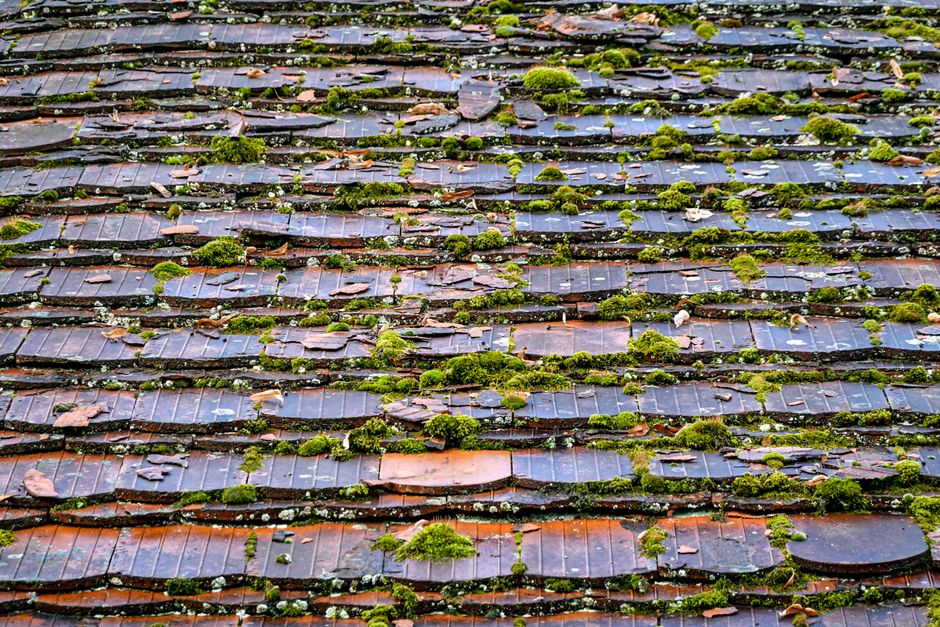
In Greenville, soft-washing a shingle roof runs about $300–$600 single-story and $525–$800 two-story or steep, with the less-common metal roof roughly $375–$700. Two Upstate line items sit on top: hand-removing moss or lichen from a shaded north slope ($150–$375) and a debris-and-gutter pre-clear on a wooded lot ($75–$175). There is almost no tile and no salt here — what moves the number is shade, rain and the winter calendar.
Greenville prices a roof unlike anywhere else on this guide, and not because the roof is exotic — it is nearly always plain asphalt shingle, the cheapest and least ambiguous surface in the trade. What makes the Upstate different is the climate around the shingle. This is the one metro on the guide cold enough to have a real winter and wet enough to grow moss aggressively, and those two facts together — not salt, not tile — are what a Greenville roof quote actually turns on.
Greenville is a shingle market, so shade and rain set the price
Greenville sits in the Piedmont at the foot of the Blue Ridge, about a thousand feet up, and its housing stock is overwhelmingly asphalt shingle, with some standing-seam and 5-V metal on older and rural homes. There is effectively none of the concrete or clay tile that dominates a Naples or Lakeland quote, and none of the coastal salt that puts a roof on its own rinse schedule. That collapses the expensive question on most of this guide — what is the roof made of — down to almost nothing here. The wall-level version of the Upstate story — red-clay staining, careful low pressure on brick and older painted wood, and the 12-to-18-month interval a shaded house runs — is on our Greenville pressure washing cost page; this page is about what the same shade and rain do to the roof, which is a different and far more seasonal problem. The price ladder for the growth itself — cheap algae chemistry versus expensive hand-removed moss and lichen — is set out on our national roof cleaning guide.
The winter is the one line every Florida page on this guide skips
Every other roof page on this guide is written for a place that never really freezes. Greenville does. At the foot of the Blue Ridge escarpment, genuine freezing nights run from roughly November into April, and that puts a hard edge on the roof-cleaning calendar that a Gulf or peninsular metro simply does not have. A shingle roof is soft-washed with a sodium-hypochlorite solution left to dwell, and that chemistry does not work — and should not be sprayed — in freezing conditions. So a Greenville roof clean is a spring-to-fall job with a real dead season in the middle of it. The practical consequence is a timing decision Florida homeowners never face: a roof that goes into the Upstate winter already carrying moss stays wet, shaded and mossy for months, with no cleaning window to fix it until spring. Booking the clean before winter, not after, is the cheaper move here — the opposite of the year-round, book-it-whenever posture that works on the coast.
Freeze-thaw is why moss on a Greenville roof is not just cosmetic
On a Florida roof, moss is ugly and it lifts shingles. On a Greenville roof it does that and catches a mechanism no Gulf roof sees: the freeze-thaw wedge. Oregon State University Extension describes what moss does physically — it “traps soil and debris, holding moisture” and on asphalt and metal it “can lift shingles and allow water to penetrate.” In a climate that actually freezes, that trapped moisture is the real problem. Water held in a moss mat freezes, expands and thaws over and over through an Upstate winter, working under the granules and into the seams the same way it cracks a driveway or a mortar joint. So the moss a warm-climate roof can wear for an extra season without much cost is, on a Greenville roof left through winter, actively prying at the shingle. That is why the moss-and-lichen line in the table below matters more here, and why the timing point above is a repair decision and not only a cosmetic one. OSU is blunt about the only durable fix: “You can clean all you want but to keep moss at bay, the environment needs to change” — more sun on the roof. Clemson’s own Home & Garden Information Center, writing about Upstate lawns, names the same drivers that grow moss on any surface — “excessive shade… poor drainage… excessive irrigation, or some combination of these conditions” — and warns that removing it “will only be temporary” unless those conditions change. A tree-shaded north slope under fifty inches of rain is exactly that environment.
The wet north of the county grows a pricier roof than the dry south
Greenville County is not one climate. It runs from the city floor around a thousand feet up to the Blue Ridge escarpment — the “Blue Wall” — along its northern edge, and that escarpment is one of the wettest places in the eastern United States. The South Carolina State Climatology Office puts Greenville’s annual average rainfall at “50.24 Inches” and tracks far wetter mountain stations, such as Caesars Head, on the escarpment just to the north. The result is a genuine split inside the metro. Homes in the northern county — Travelers Rest, Marietta, Cleveland, the coves running up toward the mountains — sit cooler, wetter and more shaded, and their roofs carry the moss and lichen that push a job toward the top of the band. Homes in the warmer, drier southern county — Mauldin, Simpsonville, Fountain Inn, Greer — tend to carry black algae streaking instead, which is cheap dwell-and-rinse chemistry. Same roof, same square footage: the one under the escarpment’s rain and shade is the more expensive clean, because it is growing the kind of biofilm you remove by hand rather than rinse off. (The wall-level version of that rain-and-shade story — and why a shaded Upstate house wants a wash every 12 to 18 months — is on our Greenville pressure washing page.)
What a Greenville roof clean actually costs
Cost ranges here are modeled on the same scale as the rest of this guide (see our methodology) and sit at the low end of it — Greenville is one of the cheapest metros we cover, for the same reasons its house-wash prices are: no salt, almost no tile, and inland Piedmont labor.
| Roof / job | Typical range | Notes |
|---|---|---|
| Shingle — single story | $300 – $600 | Soft wash, walkable pitch. The Upstate default by a wide margin. |
| Shingle — two story or steep | $525 – $800 | Access, ladders and fall protection drive the jump, not chemistry. |
| Metal — standing seam or 5-V | $375 – $700 | Coating-safe solution, worked from edges — not the shingle bleach mix. Less common here. |
| Moss or lichen on a shaded north slope | add $150 – $375 | Hand removal — the Upstate add-on. Heavier the closer you are to the escarpment. |
| Debris / gutter pre-clear on a wooded lot | add $75 – $175 | Blow-off and gutter clear before the wash on a tree-shaded northern-county lot. |
| Roof cleaned with the house on one visit | often 10–20% less | One setup, one mobilisation — ask for it as a package. |
The two rows people misread are the add-ons, and both are the Upstate climate. The moss-and-lichen line is where a shaded northern-county roof parts company with a sunny southern-county one at the same square footage — same roof, different growth, hands-on-the-roof labour. And the debris pre-clear is not padding: on a wooded lot the valleys and gutters fill with leaf litter that holds water against the shingle and feeds the growth, so the clean often starts with a blow-off before any solution goes down.
The rule that still carries over: never pressure-wash the shingle
Because the roof is nearly always shingle, the one shared rule on this guide matters here as much as anywhere. The Asphalt Roofing Manufacturers Association tells homeowners flatly to “DO NOT use a power washer or any type of brush or broom to clean algae from the roof surface”, because pressure strips the granules that protect the shingle, and prescribes a cleaning solution left to dwell “for at least 15 minutes but no more than 20 minutes” instead. The black streaking ARMA is describing is Gloeocapsa magma, a living algae; blasting it strips the surface and leaves the organism to regrow within months. The scattered metal roofs on older and rural Upstate properties are cleaned from the edges with a coating-safe solution rather than the shingle bleach mix — the chemistry reason is set out on our Charleston roof page. A crew that reaches for a pressure washer on a Greenville shingle roof is quoting a faster, worse job.
What to ask a Greenville roof crew
- Is it moss or lichen, or only algae streaking? Moss and lichen have physical bulk and are hand-removal labour that should be its own line; black streaking is cheap dwell-and-rinse chemistry.
- Can you book me before winter? On a roof already growing moss, timing is a repair decision here — clean it before the freeze, not after, because there is no winter window to fix it.
- Is a debris and gutter clear included, or extra? On a wooded northern-county lot it is real work; get it named in the quote rather than discovered on the day.
- Soft wash, confirmed in plain words. A shingle roof is soft-washed, never pressure-washed; a pro will say so unprompted and usually mention the dwell time.
Getting a real number in the Upstate
Photograph the roof — especially any slope that sits under trees and looks green and furred rather than only streaked black — plus the valleys and the gutter line where debris collects. Tell the crew three things: that it is shingle (or metal, if it is one of the older roofs), how much of it sits in shade, and whether any slope carries moss or lichen rather than just algae. Those move an Upstate roof quote far more than square footage does, and where in the county you sit — escarpment-north or dry-south — is worth mentioning too. Ask for a flat price by the job, confirm the shingle will be soft-washed, and ask to be booked before the winter if the roof is already growing. Locally, the Greenville roof crew we recommend for shaded-slope soft-wash work quotes flat across Greenville County and treats low pressure as a rule rather than an upsell. Our Greenville pressure washing cost page covers the rest of the house — the brick, the painted wood and the red-clay staining a coastal page never mentions — and the estimator will put a range on the roof before you call.